How to buy your first vintage denim bundle (and make money)
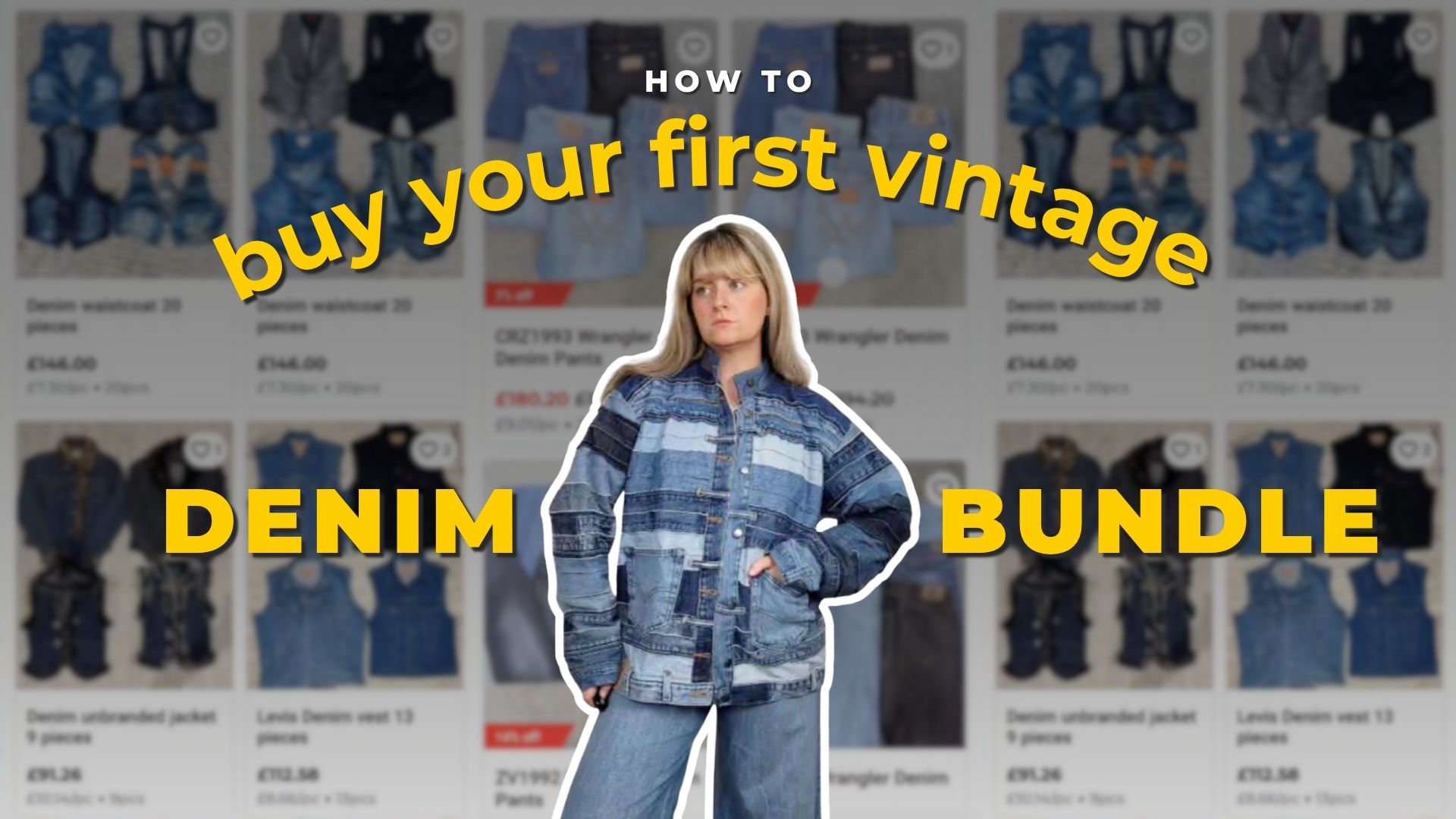
Buying denim wholesale for the first time is exciting, right up until you're about to drop £150 to £400 on a box you've never touched. This recap breaks down a practical way to buy your first denim bundle without guessing, and how to set yourself up for faster sell-through once it lands.
Top takeaways
- Pick a niche firstYour denim bundle should match the shop you are building, not just whatever looks like a bargain.
- Only buy with proofIf there are no clear photos or videos of the actual stock, treat it as a red flag.
- Request size and wash mixVaried sizes plus light, mid and dark washes gives you more buyers and better sell-through odds.
- Start small, then scaleA small first order gives you real data on what sells before you commit serious cash.
- Match stock to platformDepop, Vinted and eBay reward different types of denim, so list with a plan.
Denim sells fast, but bad bundles cost twice
Denim wholesale is one of the easiest categories to move all year round, but it's also where beginners burn money. The loss isn't just the purchase price. It's the listing hours and the storage space it eats while it sits. Chloe puts it plainly:
When you buy a bad bundle, it doesn't just cost you the purchase price. It costs you your storage space, your listing time, and the energy that it takes to literally get these pieces up online and hope that they will sell.
— Chloe Francis
Build the bundle around your shop, not your supplier
Before you think about how to buy your first denim bundle, get clear on what your shop is. Buying good denim in bulk and then struggling because it doesn't match your shop's aesthetic means every listing feels like pushing stock to an audience that doesn't trust you yet.
Here's what we'd actually do before buying: build a quick Pinterest mood board for one denim lane, Y2K fits, western, utility, classic Levi's basics, then only buy bundles that match it. If your board is 80 percent mid-wash 501s and boxy jackets, a random bundle of skinny jeans is going to fight you at every step.
How to check a supplier before you spend anything
The safest money you'll ever spend on reselling denim is the time you spend checking a supplier properly. A reputable wholesaler should show you the actual stock via photos, a detailed video walkthrough, video chat or in-person handpick. If they refuse, it's usually not because they're busy.
Specific checks that matter for jeans reselling:
- Condition: crotch wear, hems, stains, stretched waistbands.
- Quality: fabric weight and whether it has lost shape.
- Variety: sizes and washes, not just “assorted”.
- Signals: reviews and whether their stock seems to move consistently.
If you're buying on a marketplace, check whether listings have reviews and repeat buyers before you commit. That tells you more than the product description will.
Request the right mix or you'll cap your sales
Most first-time buyers go wrong by accepting whatever's offered, then trying to make it work once it arrives. With denim, your request is half the profit. Ask for size range and wash range upfront, because both affect who can buy and how fast you can sell.
Ask for light, mid and dark washes. They attract different buyers and spread your risk across the bundle. On sizing, vintage denim runs smaller than labelled, so measurements aren't optional. A tagged size 16 can fit like a 12, and that becomes a returns problem if you skipped the measurements in your listing.
On grading, don't accept Grade A or "good used" at face value. Ask what flaws are allowed in that grade. Does it include repairs? Fade? Small stains? A broken zip? Every supplier grades differently. Get their definition in writing, even if it's just via messages.
Chloe puts the typical first commitment at £150 to £400. That's enough to run a proper test without overexposing yourself if the bundle isn't right.
Keep your first order small so you can learn fast
The win on a first denim bundle isn't getting a bargain. It's buying stock you can actually analyse. Starting small lets you sell through, see what moves, and repeat with confidence.
Most people skip this because they want to jump straight to the big box. The problem is you don't have data yet. You don't know your best sizes, your best cuts, or what your customers will pay on your platform. A small first order isn't playing it safe. It's buying information.
Sell denim where it fits, not everywhere at once
Crosslisting is fine. Posting everywhere with no strategy is how good stock gets buried. Different platforms suit different denim, so match the piece to where buyers are already shopping for that type.
Depop suits statement denim that photographs well: Levi's, Y2K cuts, embroidered waistcoats, standout jackets. Its audience skews younger and is actively searching for pieces with visual appeal and a clear era. Vinted buyers tend to know what they want and they're shopping on price, so functional basics and staple jeans move well there. eBay suits higher value pieces: rarer cuts, pristine 501s, unusual finds, anything a grail hunter would search for by specific detail.
If your bundle is heavy on basics, Vinted can clear volume quickly. If you've got a few special pairs, an eBay title built around specific details will do more work than a generic crosslisting.
Listings and pricing are where profit is made or lost
Once your denim is photographed, your listing decides whether it sells. Your title needs to lead with what people search for.
Your five first words matter the most.
— Chloe Francis
Front-load searchable terms: "Vintage Levi's 501 straight leg jeans," "Vintage Y2K oversized denim jacket," "90s denim embroidered western waistcoat." Those first words are what surface your listing in search before a buyer's clicked anything.
On descriptions, include measurements every time. Vintage sizing is inconsistent and a buyer who can't tell if something fits won't buy it.
On pricing, don't train buyers to wait for discounts. Chloe's warning on this is worth taking seriously. Constant sales devalue your shop and attract buyers who'll only engage when there's a reduction.
Before you buy
Do one small test bundle and treat it like an experiment. Track what sells, what sits, what sizes move and which platform converts best. Buy your next denim wholesale order based on that data, not on guesswork.
If you want to do that with verified wholesalers and the option of exact bundles, Fleek has buyer protection in place for when stock doesn't match the listing, which matters when you're new and cautious with cash. Start sourcing.