How to source and sell vintage accessories for profit
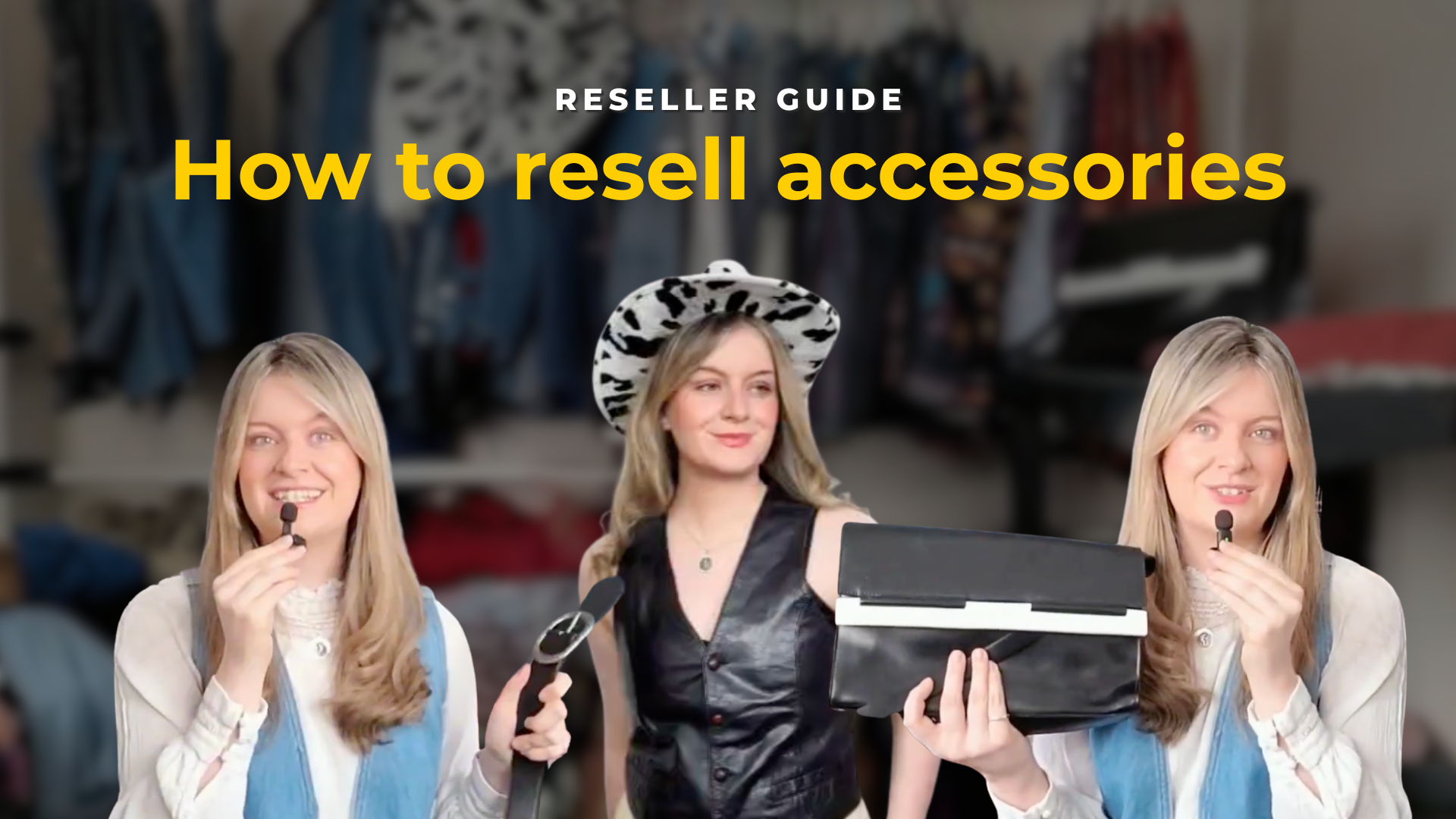
Accessories are the easiest money most resellers ignore. Bags, belts, sunglasses, hats and ties can move faster than clothing, cost less to buy in, and give you reliable sales between bigger vintage pieces.
Top takeaways
- Low buy-in, strong marginAccessories often cost £1 to £5 per piece at source and sell for £8 to £20 or more. That is a reliable margin even when clothing sales are slower.
- Condition matters more than categoryOne cracked belt or scratched lens can dent the profit from a sourcing trip. Build a condition check into every pick.
- Job lots beat one-offs for low-ticket itemsTies and small accessories work best bought in bulk. Paying per piece squeezes margin once fees and postage are factored in.
- Grade A only until you know what you are doingIf you are new to accessories, stick to pieces that need nothing doing to them. Restoration eats time and kills margin if you have not priced for it.
Accessories work best alongside your clothing stock
Accessories are not a replacement for your clothing rails, but they are a proper margin lever when you treat them as staple stock that feeds your algorithm and your live shows. As Chloe puts it:
Accessories will not be the anchor to your business, but they will improve your margins. They'll speed up your turnover, and also they'll give your shop a nice niche, distinctive look.
— Chloe Francis
The accessory categories worth prioritising
If you want a simple starting point, focus on bags, belts, sunglasses, hats and caps, with ties as your volume add-on. These are the categories that move consistently when you need stock that stands alone without an outfit.
- Bags: structured handbags, leather totes, anything with a Y2K or 90s feel, including unbranded vintage that just looks right.
- Belts: western styles, chunky buckles, brass hardware, plus deadstock belts with tags still attached.
- Sunglasses: branded pairs like Ray-Ban, distinctive 70s shapes. Avoid cheap plastic.
- Hats and caps: branded or genuinely unique vintage prints. Look for internal tags and branded buckles.
- Ties: patterned, ideally silk. Avoid polyester where possible and buy as job lots rather than one at a time.
What "sellable" looks like in a charity shop
You are not hunting "vintage". You are hunting "can't get this on the high street". That is the filter that stops you wasting time on generic pieces buyers can replace in five minutes.
Just look for things in charity shops that you can't buy on the high streets.
— Chloe Francis
Y2K and 90s pieces have been among the stronger performers in recent years. Look for structured silhouettes, good hardware, logos and visible brand markers. Deadstock items with tags are worth picking up when you find them, but check condition and authenticity markers before you buy.
Materials and condition grading
Accessories are small, but faults are expensive. Cracking leather, brittle belts, broken zips, loose hinges, scratched lenses. If you are spending your evenings packing orders, you do not want restoration projects sitting in a pile.
If you're first starting out as a reseller, don't buy below grade A unless you exactly know how to restore these pieces.
— Chloe Francis
The best materials to look for are denim, leather, cotton and soft suede. Grade A means no scuffs, no damage, nothing that needs fixing before you can photograph and list it. If you buy below Grade A without a restoration plan, you are likely to lose money on time, cleaning products, returns and dead stock.
Condition checks you can do in 30 seconds
This is where most people lose money on accessories. You pick up a nice-looking bag, get it home, and the zip sticks or the corners are worn through. Build a routine and repeat it every time.
- Bags: test every zip, check the hinges, feel the base, inspect the corners, strap attachments and lining.
- Belts: flex the leather slightly. If it cracks or feels brittle, put it back. Check the holes are not stretched and the buckle works cleanly.
- Sunglasses: hold the lenses up to light at an angle to check for scratches. Check both arms are straight and the hinges are tight.
Pricing and margins
Accessories work best when your cost per piece is low, your average sell price is consistent, and you are not sinking time into styling.
Chloe Francis shared the numbers from her own shop:
I think I paid £5 each for them, but I was selling them for like £15 profit.
— Chloe Francis
- Belts: buy at around £5 each, target roughly £15 profit per belt when demand is strong.
- Ties: a full job lot for £5 can yield around 50 ties. Most sell at £8 to £10, with some at £5. Ties can be low margin if you pay per piece. If you pay £1 each and sell at £5 to £7, fees and postage can squeeze you. The job lot approach is what protects your margin.
- Bags: charity shop buys at £1 to £3 each can sell for a strong markup depending on style and condition.
Sourcing routes
Charity shops are good for hands-on quality checks but unpredictable for volume. If you are scaling, they will not feed your streams or daily listings on their own.
Chloe's preference is to handle stock before buying:
Pick the item up and hold it in your hands and test it.
— Chloe Francis
- In person: charity shops, car boot sales and handpick events give you that hands-on check before you commit.
- Remote: video call handpicks let you ask about quality and see the stock before paying.
- Wholesale: exact bundles work when you can verify what is included and the condition is clear upfront.
Before you start
One category at a time is a cleaner way to build data on what works for your shop. Buy 10 to 20 pieces, run the same condition checks every time, and track your sell-through and profit per item before you scale.
If you want to source accessories in volume without gambling on unknown stock, Fleek has exact bundles you can see before you buy, plus buyer protection if the order does not match the listing. Start sourcing.